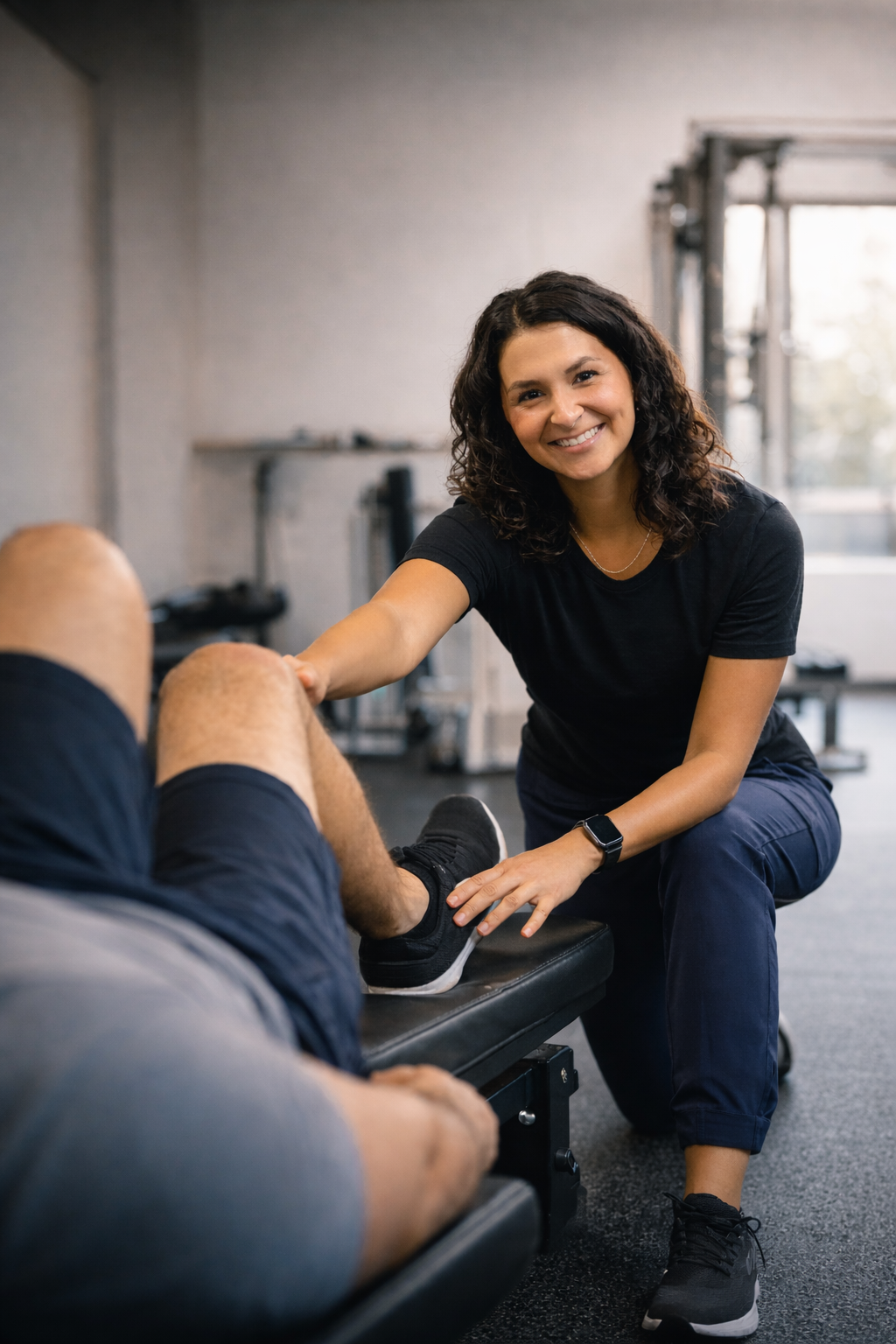
By Reina Vierra, PT, DPT
Hi, I’m Reina Vierra, a Doctor of Physical Therapy, and I want to talk about something that doesn’t get nearly enough honest airtime: what pregnancy and the postpartum period actually do to your body — hormonally, physically, and emotionally — and why staying active through all of it matters more than most people realize.
But first, let me tell you why I even went down this rabbit hole.
Why I Got My P&PA Certification
For a long time, the message women have received around pregnancy and fitness has been either “take it easy, you’re fragile” or, on the flip side, a kind of performance pressure to keep crushing workouts until the day you deliver. Neither of those feels right to me.
Women are not fragile. Full stop. Our bodies grow an entire human, physically create food to feed that human, and endure a level of hormonal and physical change that is, frankly, wild. But pregnancy is also not the time to be chasing personal records or pushing limits for the sake of it. It’s a time to shift your mindset — from punishing your body to preparing it. Strong for birth. Strong for the chaos and beauty that comes after.
That’s exactly why I pursued my Pregnancy & Postpartum Athleticism certification with Brianna Battles. Through that program, I learned how to assess patients through a completely different lens: breathing mechanics, pressure distribution, common compensatory movement patterns when lifting, pelvic floor symptoms, nutritional needs, and psychological stressors. Most importantly, it reinforced the practice of looking at each woman as a whole person — not just someone in a temporary phase — and honoring both her long-term goals and where she is right now.
So let’s get into the science, because understanding what your body is doing is genuinely empowering.
The Hormone Rollercoaster (It’s Real, and Here’s Why)
A lot of what you feel during pregnancy — the mood swings, the exhaustion, the physical aches, the emotional highs and lows — comes down to hormones operating at levels your body has never encountered before. Research on pregnancy hormones paints a pretty remarkable picture.
Estrogen climbs to levels roughly 100 times higher than what you experience in a normal menstrual cycle. Let that sink in.
Progesterone rises to levels your body simply won’t produce outside of pregnancy. It’s doing critical work — helping establish the placenta, supporting blood vessel growth, and keeping the uterus from contracting so your baby has room to grow. But that same progesterone is also responsible for those intense mood swings. One way to take the edge off? Moving your body. Even 30 minutes of moderate activity — we’re talking lifting something around 10 pounds, nothing extreme — is enough to trigger endorphin release, your body’s natural feel-good hormone, and can meaningfully stabilize your emotional state.
Progesterone also slows down your digestive system. It decreases bowel motility, which is a fancy way of saying things move much more slowly than usual. The result: constipation, gas, and (the one nobody loves to talk about) hemorrhoids. If you’re dealing with this, a few things that actually help are a high-fiber diet, stool softener pills to reduce straining, topical relief creams, and even a heating pad to sit on.
Prolactin, the hormone responsible for milk production, kicks in around month five of pregnancy. You won’t start producing regular breast milk until two to four days after birth, but the setup is happening well before that.
Relaxin is doing exactly what it sounds like — relaxing your ligaments and softening and lengthening the cervix to prepare your body for birth. This is a big reason why so many pregnant women experience hip, knee, and back discomfort, especially as pregnancy progresses and weight increases. Understanding that this is a structural and hormonal change (not just “normal aches”) is important for how we approach movement and support.
And as you approach the end of pregnancy, oxytocin enters the picture more prominently, stimulating uterine contractions as your body begins preparing for labor.
Postpartum: The Part Nobody Prepares You For
Here’s where I think the conversation really needs to shift.
Within 24 hours of giving birth, estrogen drops to levels lower than menopause. You’ve spent months with estrogen at an all-time high, and then — almost overnight — it’s gone. People casually call this the “baby blues,” but understanding the mechanism makes it feel a lot less like a personal failing and a lot more like a biochemical earthquake.
The first 12 weeks postpartum are genuinely the hardest for most people, and this is why. Your brain has estrogen receptors everywhere — regulating mood, memory, temperature, sleep, and pain perception. When estrogen crashes, all of those systems feel like they’ve gone offline at once. That’s not weakness. That’s physiology.
Meanwhile, prolactin — which keeps milk production going — remains elevated for as long as you’re breastfeeding. In addition to its role in milk supply, prolactin is also a mood-altering hormone. In high amounts, it can drive anxiety, emotional reactivity, and a kind of hypervigilant, on-edge nervous system state. And here’s the kicker: prolactin and estrogen work in opposition. So while one is sky-high, the other is at rock bottom — a combination your body has genuinely never experienced before.
So, Should You Exercise During Pregnancy?
Yes — with intention and with proper guidance.
Research shows that women with uncomplicated pregnancies are actively encouraged to continue physical activity. There are some important nuances though. Mean birth weight does tend to be somewhat lower when women exercise at or above 50% of their pre-pregnancy intensity levels compared to non-exercisers, which is why modifications matter. Adjustments can be made at any stage of pregnancy, and later in pregnancy they’re increasingly important — but what’s right is highly individual.
That’s exactly the point. There is no one-size-fits-all protocol for a pregnant or postpartum body, which is why having a provider who understands how to assess and program for you specifically makes all the difference.
Here’s the Bottom Line
If you are currently pregnant, thinking about becoming pregnant, or navigating the postpartum period and want to stay active, feel strong, and do it safely — I’m here for it. This is exactly the work I’m passionate about and trained to support you through.
Your body is remarkable. Let’s treat it that way.
Want to learn more or work together? Reach out — I’d love to be in your corner.
Book A Discovery Call HERE
Read Dr. Reina’s Full Bio HERE
Want More Blogs? Click HERE
Check out our Locations:
Expert Physical Therapy in Franklin
Expert Physical Therapy in Brentwood
Expert Physical Therapy in Donelson
Expert Physical Therapy in the comfort of you own home
Follow Us on Instagram: HERE