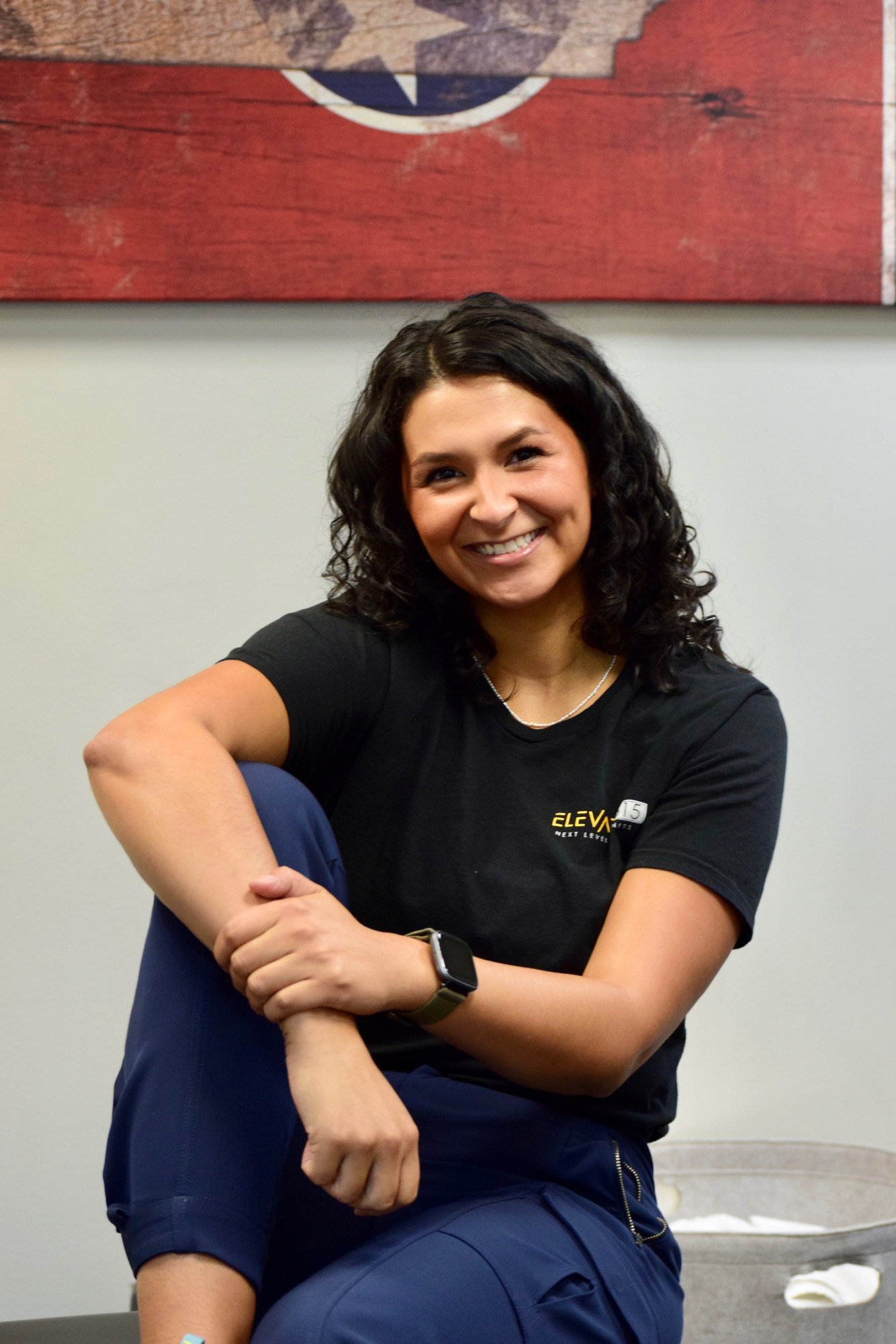
By Reina Vierra, PT, DPT
If you weren’t able to make it out on June 10th, we missed you — but don’t worry, we’ve got all the highlights right here.
This was our second Women & Wellness Night at Elevate615, and the energy in the room was exactly what we hoped for: women showing up for each other, asking real questions, and finally talking about the stuff that usually gets whispered about (if it gets talked about at all).
This Round’s Theme: Hormones at Every Stage
We tackled the hormonal shifts women go through across different life stages, dove deep into Hormone Replacement Therapy with the wonderful Katie Fordham from Engage Health, and closed out the night with the topic everyone’s buzzing about right now — GLP-1s — broken down quick-and-dirty style by Jamie Newmann!
Wait…What Even Is Women & Wellness Night?
Great question. Here’s the heart behind it.
We started these events because we genuinely believe in building community around women’s health. So many topics get brushed aside or have been dubbed as “embarrassing” to bring up — even though literally every woman will experience some version of them. In the clinic, we have incredibly honest conversations with our patients every single day, and at some point, we realized: why should these conversations stay behind closed doors? We wanted to close that gap and normalize talking about the “taboo” stuff. That’s exactly where last week’s theme came from.
It’s also just an extension of how we already do things differently at Elevate615. We’re not your typical physical therapy clinic — we’ve got longer one-on-one sessions, truly individualized care, and a heavy focus on education and long-term health. It’s never just about moving better or feeling better in the moment. It’s about setting our patients up to live better, for longer.
We hope to make Women & Wellness Night a quarterly event — a space to bring women together, learn from real experts, talk about the topics that matter, and connect with each other along the way.
Key Clinical Takeaways: Perimenopause/ Menopause 101
Let’s get into the good stuff.
What even is perimenopause? Perimenopause is the transitional phase leading up to menopause, when the ovaries gradually slow their production of estrogen and progesterone. It can technically begin as early as your mid-30s and last up to a decade, though for most women it kicks off sometime in their 40s. The average age of onset is 43.5, and it typically lasts anywhere from 4 to 10 years (average: about 4 years).
The key difference between perimenopause and menopause: menopause is officially defined as 12 consecutive months without a period, while perimenopause is all about irregular cycles and hormones that are fluctuating, not flatlining.
The Top 5 Symptoms
- Hot flashes & night sweats
- Weight gain & redistribution
- Anxiety, depression & panic attacks
- Sleep disturbances
- Fatigue
Here’s the thing that surprises a lot of women: symptoms show up basically everywhere in the body, and that’s because estrogen receptors are spread throughout nearly every system you have. That’s why it’s never just hot flashes… the full symptom list goes way beyond the top 5. Here’s the rundown by category:
- Menstrual — changes in cycle length, becoming longer, shorter, or just unpredictable
- Vasomotor — hot flashes, night sweats, cold flushes
- Sleep disturbance — trouble falling asleep, waking up in the night, restless legs
- Mood & mental health — anxiety, depression, panic attacks, irritability, low self-esteem, feeling overwhelmed, loss of motivation
- Cognitive changes — brain fog, memory lapses, short attention span
- Physical changes — abdominal weight gain, bloating, breast tenderness, joint pain, muscle aches, fatigue, headaches
- Hair, skin & nails — thinning hair, brittle nails, dry skin, changes in skin texture, acne, burning or tingling sensations
- Digestive & appetite changes — constipation, diarrhea, nausea, changes in appetite
- Sexual & reproductive health — vaginal dryness, pain with intercourse, decreased libido, interstitial cystitis, UTIs
- Cardiovascular changes — heart palpitations, blood pressure changes, increased cholesterol
It’s a lot, we know. But that’s exactly why naming it matters — when you understand why your whole body feels different, it stops feeling random and starts feeling explainable.
Let’s talk about the elephant in the room: does estrogen cause cancer? This is one of the biggest myths in women’s health, and it deserves to be put to rest. In 2002 the Women’s Health Initiative was changed and women have been led to believe hormone replacement therapy causes cancer — but that belief was widely misinterpreted and mismarketed1&2. Multiple sources noted that the “black box” warning was removed in November of 2025 to better reflect the risk-benefit profile and the new research findings2. Yes, there are risks associated with Hormone Replacement Therapy, but they are few and for most women, the benefits outweigh them significantly.
Timing matters, but it’s not the whole story. Ideally, hormone therapy is started before menopause or within about 10 years of menopause onset, since that’s when the protective benefits are strongest. But if you’re past that window, that doesn’t mean hormone therapy is off the table for you — it just depends on your provider, your individual health picture, and the reality that research in this area still has some catching up to do.
A Huge Thank You
To everyone who came out, asked questions, and made this night what it was — thank you. This is exactly the kind of community we set out to build, and we can’t wait to do it again next quarter.
If you missed it this time, follow along so you don’t miss the next one. And if hormones, perimenopause, or any of this resonated with you, we’d love to chat — this is exactly the kind of whole-person care we focus on every day at Elevate615.
See you at the next Women & Wellness Night! 💪
Want to learn more or work together? Reach out — I’d love to be in your corner.
Book A Discovery Call HERE
Read Dr. Reina’s Full Bio HERE
Want More Blogs? Click HERE
Check out our Locations:
Expert Physical Therapy in Franklin
Expert Physical Therapy in Brentwood
Expert Physical Therapy in Donelson
Expert Physical Therapy in the comfort of you own home
Follow Us on Instagram: HERE